

Mō ichido
Mō ichido (もう一度) means “one more time”. It is a very simple Japanese phrase, but after the TOGKF European Gasshuku 2026, I felt again how important this simple idea is in martial arts.
After many years in karate and kung fu, I already know that repetition matters. Every serious martial artist knows this. But there is a difference between knowing a principle and being reminded of it through the body. Sometimes an idea you already understand becomes clearer because you experience it again under the right teacher, in the right environment, and with the right kind of training.
That was what happened to me at the Gasshuku. The lesson was not a secret technique, a hidden bunkai, or a completely new concept. It was simply this: do it again. But do it properly, with awareness, and under the guidance of someone who knows what the movement should be.
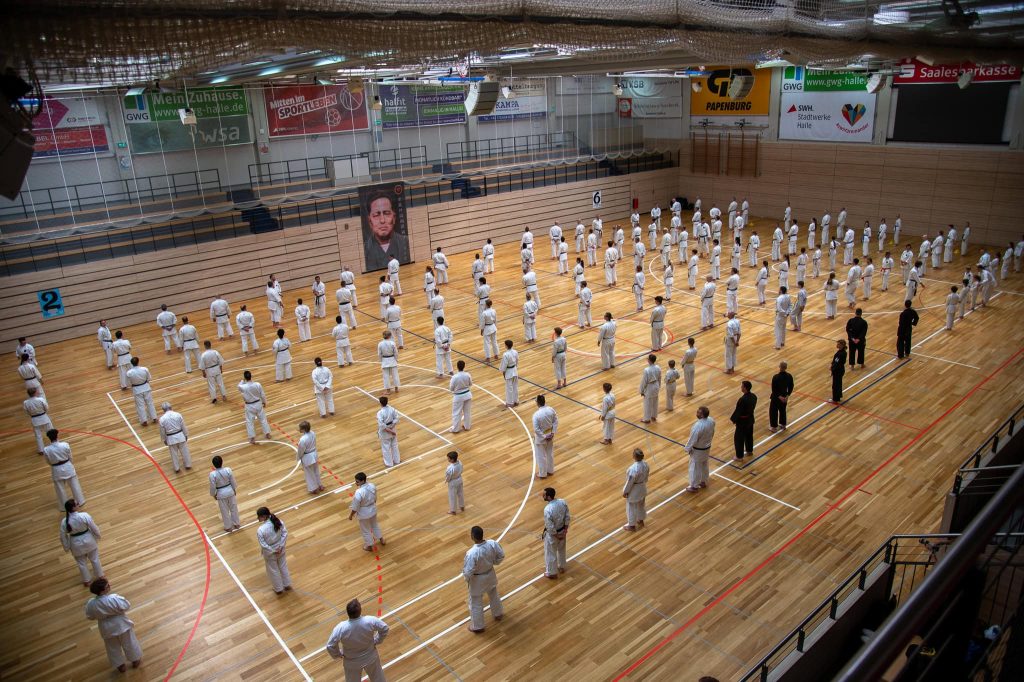
The TOGKF European Gasshuku took place from Friday 15 May to Sunday 17 May 2026 in Halle, Germany. There were many things I could talk about, but the one idea that stayed with me most strongly was mō ichido. I want to share it through two moments: first, training Saifa with Kuramoto (蔵元雅一) Sensei, and second, watching his Sanchin kata.
Repeating Saifa with Kuramoto Sensei
On Sunday 17 May, we had a session with Kuramoto Sensei, one of the senior Okinawan instructors and a direct student of Higaonna Morio Sensei (東恩納盛男). In that session, we worked on Saifa kata.
Saifa is I would probably say one of the kata where I feel the difference between styles most clearly. Some movements in the Goju-Ryu version carry small differences that I remind myself such as details in the direction, the timing, the way the hands connect to the body, and the way one movement leads into the next.
So when we started, I was not approaching Saifa as a beginner trying to remember the sequence. I knew the kata, but I was trying to refine the feeling of it.
When Repetition Starts to Change the Body
The session was not about stopping every few seconds to correct every small detail. Kuramoto Sensei made us repeat. Again and again. Mō ichido.
For most of that session, we repeated Saifa. At first, it felt quite normal. The first three or four times felt almost the same. I was still checking the movement, adjusting the details, and making sure the kata was going in the right flow. But after around the 8th repetition, I started to feel something slightly different. The movements began to connect more smoothly. The energy did feel more connected between one technique and the next. The kata started to feel less like separate pieces and more like one continuous thing.
That change was not dramatic from the outside, but inside the body it was very noticeable. When you practise a kata only once or twice, you can still rely too much on conscious control. You are telling yourself, “Now I need to do this. Then I need to do that.” But after repeating it many times, the body starts to take some of that responsibility. The movement begins to come out with less mental interruption. Muscle memory starts to work, and the kata begins to feel more natural.
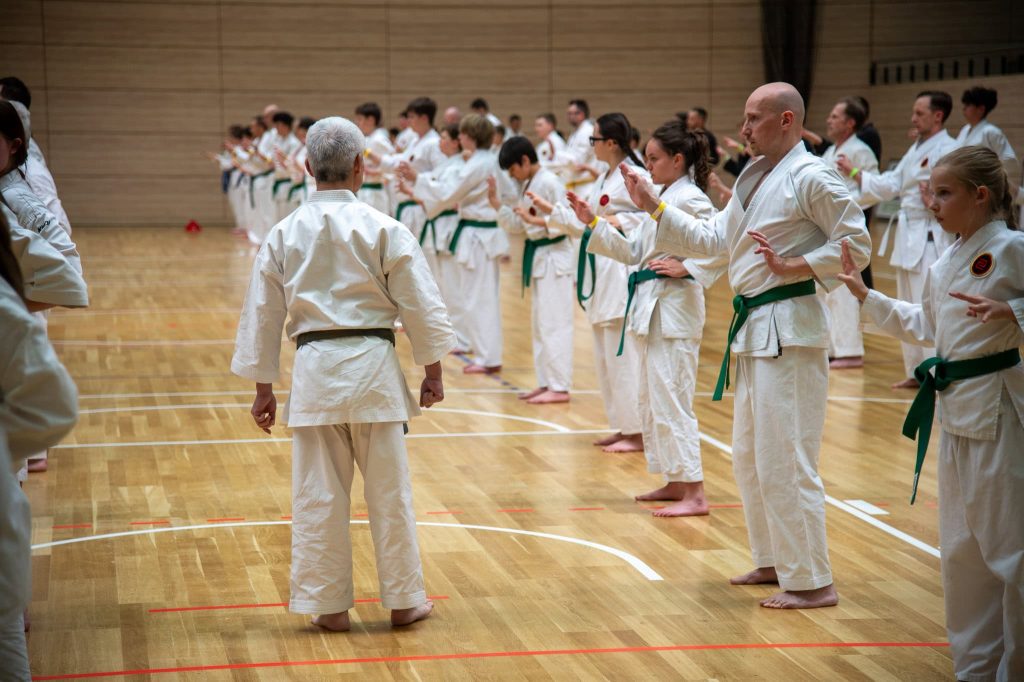
After more repetitions, perhaps around the 15th time and onwards, another feeling appeared. Some parts of the kata that I had not paid enough attention to before started to show themselves. Certain transitions began to make more sense. I could feel where the power should go, where the energy should arrive, and how one movement should prepare the next one. It was not because somebody explained every detail in words. It was because repetition gave the body enough time to find the connection.
Repetition Only Works When the Movement Is Correct
There is one important point that must be said clearly. Repetition is powerful, but only if what you are repeating is correct.
If you repeat good kata, correct movement, and correct energy, the repetition will slowly build a better martial artist. But if you repeat the wrong movement again and again, that wrong movement also becomes stronger. It becomes habit. It becomes part of your body. Then later, it may take a long time to remove it.
This is why the role of the sensei is so important. Mō ichido does not mean blindly repeating whatever we feel like doing. It means listening to the sensei, remembering what the sensei has shown, and trying to repeat the movement in the way we have been taught. The teacher gives the direction, repetition allows the body to absorb it.
In my own experience, this is especially important when a kata exists in slightly different versions across different styles. The outside shape may look similar, but small details can change the whole feeling. If we repeat without listening, we may only repeat our own old habits. If we listen carefully and repeat correctly, the kata begins to reshape itself in the body.
This, for me, is one of the benefits of mō ichido. Repeating a kata many times can smooth out the problems you used to have. It can make the body stop fighting against the movement. It can connect the inside feeling with the outside shape. It can also make you focus less on the little areas where you are always trying to correct yourself, because gradually those areas begin to settle into the whole movement.
Saifa Feeling Closer
Saifa is not a very long kata. It may only take around one minute, or perhaps a little longer depending on speed. But repeating the whole kata, or repeating sections of it again and again, changes the relationship you have with it.
By the end of the session, Saifa felt different to me. It was still not my best kata, but it felt closer. When I returned to the dojo afterwards and practised it again, I felt that the kata had become more connected to who I am.
That does not mean the kata was suddenly solved. It means the repetition had opened something. It had changed the feeling from the inside. This is a small but important difference, and it is one that any serious martial artist will understand.
Seeing Mō Ichido in Sanchin Kata
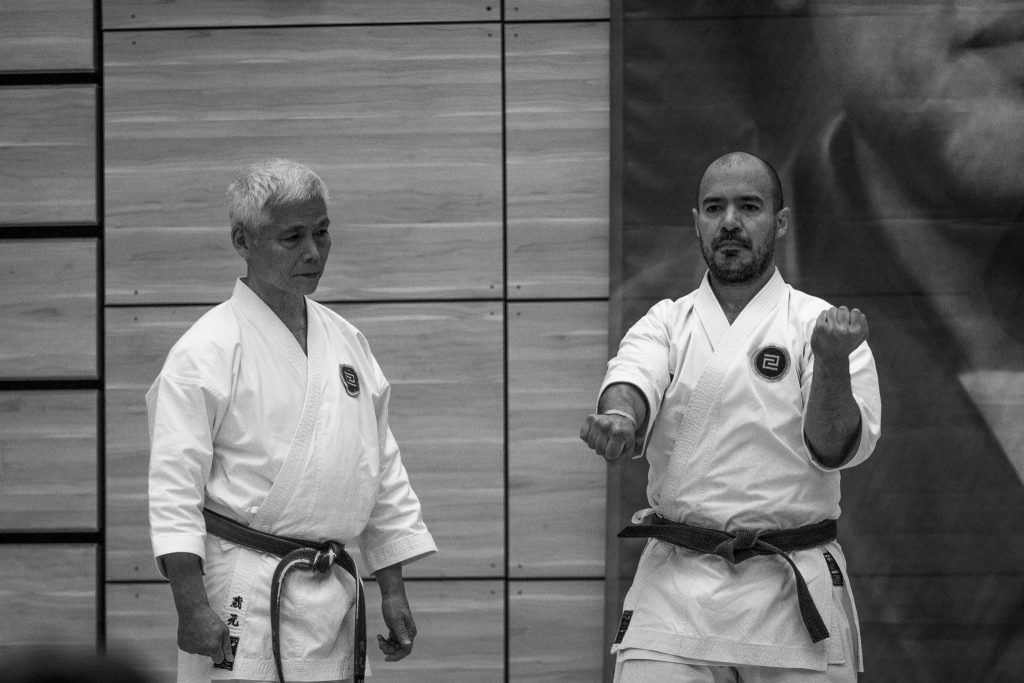
The second moment that stayed with me was watching Kuramoto Sensei demonstrate Sanchin kata.
Sanchin is often described as a breathing kata, but when you see someone who has trained it deeply for many years, you realise that “breathing kata” is a very simple description for something much deeper. His Sanchin looked exceptional. Because of my Chinese martial arts background, I could see a connection with the Chinese side of training: the breathing, the tension, the strengthening of the body, and the internal feeling were close to certain ideas in Qigong (氣功) and body conditioning.
But what made it impressive was not only the outside shape. Many people can copy the outer form of Sanchin. We can step, breathe, tense the body, and finish the kata. But when Kuramoto Sensei did it, the whole thing looked connected. It was difficult to describe, but it felt as if the breathing, the intention, the muscles, and the execution were all joined together.
Breathing, Intention, Muscle Connection, Execution
If I break down what I saw, I would describe it in four parts: breathing, intention, muscle connection, and execution.
First, the breathing was different. In Sanchin, we all know that we need to breathe properly, inhale and exhale fully. But “fully” is not the same for everyone. When he breathed out, it felt as if every last bit of air was being pushed out with control. When he breathed in, it was also complete. It did not feel like ordinary chest breathing. It felt like the breath came from the tanden (丹田) area, from the centre of the body. This kind of breathing cannot be created just by understanding the idea. It has to be trained again and again over many years.
Second, the intention was very clear. His mind did not look separate from the kata. The intention seemed to control the breathing, and at the same time it controlled the body. It was not simply “trying hard”. It was directed. The mind, the breath, and the body were working together.
Third, the muscle connection was different from ordinary tension. When people train muscles in the gym, they often train particular muscle groups, such as biceps, chest, or legs. But Sanchin trains the whole body to connect, including small muscle groups that we normally do not use properly. When Kuramoto Sensei moved, even the small areas of the hands and arms looked alive and connected. Sometimes I could see a small shaking in the hand, not because of weakness, but because the tension and breathing were being pushed to a very high level of control.
Finally, the execution came from all of this. The technique was not just a hand moving forward. The movement came from the breathing, the intention, and the connected body. Without the breath, the body would not move in that way. Without intention, the breath and body would not connect in that way. Without the body, the breath and intention would not appear in a visible form.
What a Lifetime of “One More Time” Can Become
This is what made me think more deeply about mō ichido. Repetition is not just for making the kata look cleaner. If someone repeats Sanchin for many years, tens of thousands of times, the kata can become something beyond ordinary movement. It can extend the person’s capability. The breathing becomes deeper than normal breathing. The muscles connect beyond ordinary tension. The intention becomes stronger and clearer. The body becomes able to do something that it could not do before.
From the Saifa session, I felt how repeating a kata many times in one session can change the feeling of the movement. At the beginning, it may feel ordinary. It may feel as if nothing special is happening. But after several repetitions, the body begins to connect the movements more naturally. After more repetitions, details you did not notice before may begin to appear. The kata starts to teach you from the inside.
From watching Sanchin, I saw what a lifetime of mō ichido can look like. It is not only about remembering the kata. It is about changing the body, the breath, the intention, and the execution. It is about going beyond the level you thought you had.
The Lesson I Took Home
The most important lesson for me is this: today, we may think our ability is only at a certain level. We think, “This is my Saifa. This is my Sanchin. This is how far I can go.” But by doing mō ichido, one more time, again and again, we slowly extend that limit. We reshape the kata, but at the same time the kata reshapes us.
But this only works if we repeat the right thing. Correct repetition builds correct movement. Wrong repetition builds wrong habit. That is why the sensei matters. We listen, we remember, we correct, and then we repeat.
So the lesson I brought home from the European Gasshuku 2026 is simple, but very powerful. Do it again, but do it properly. Repeat it with awareness. Repeat it with the teacher’s correction in mind. Repeat it until the body begins to understand. Repeat it until the movement becomes smoother, the energy becomes more connected, and the meaning starts to come out naturally.
Mō ichido.
One more time.