
A Christmas Child Born Into Fire
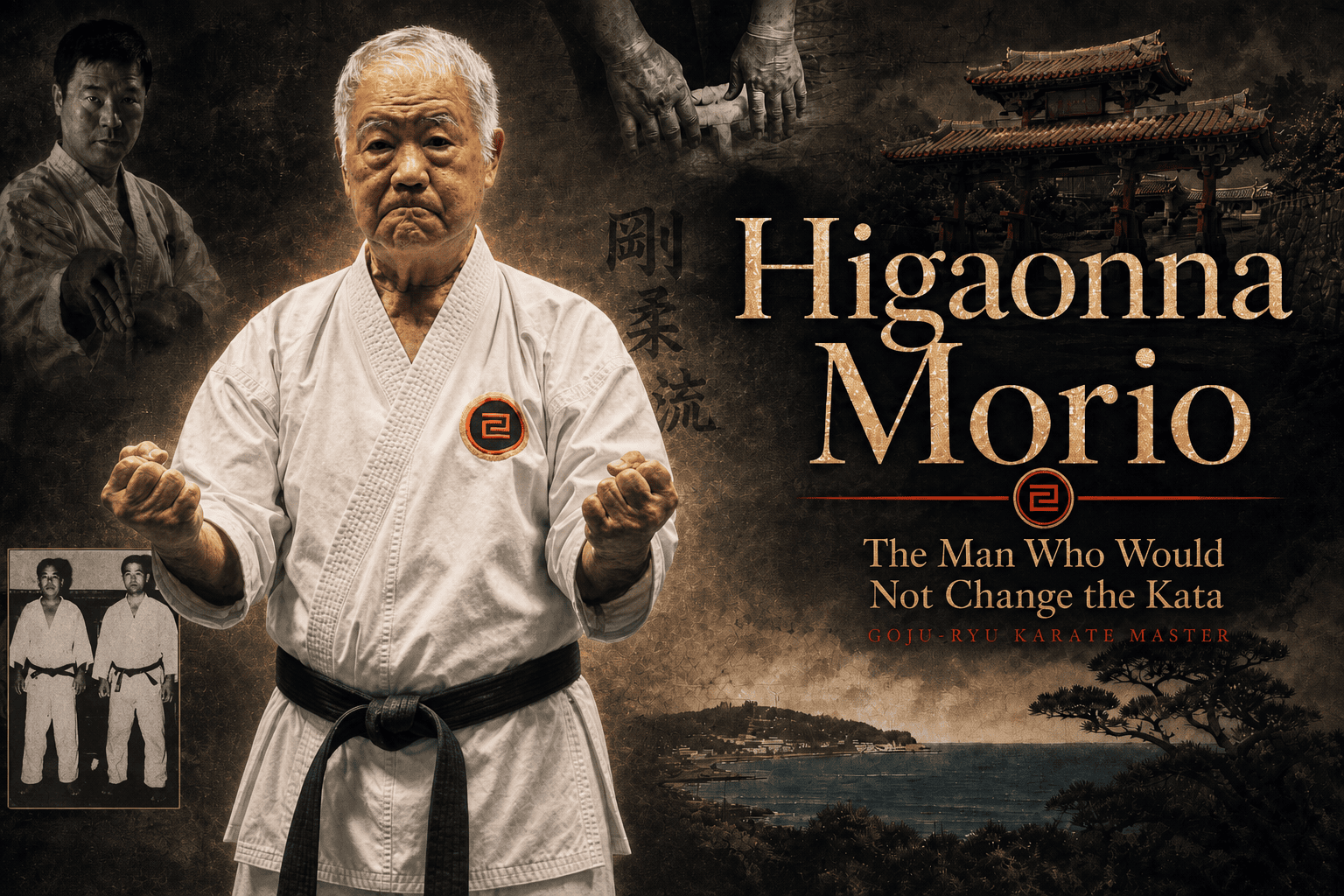
On Christmas Day, 1938, a boy was born in Naha, Okinawa, who would one day be called the most dangerous man in Japan in a real fight. His name was Higaonna Morio (東恩納 盛男). Nobody in the delivery room knew it, of course. There was no prophecy. No grandmaster arrived at the door with knowing eyes. There was only a police officer father, a devoted mother, and the fragile sounds of a newborn on a small island perched at the southern edge of an empire that was already steering toward catastrophe.
Okinawa in 1938 was a place caught between two identities. It still carried the ghost of the old Ryukyu Kingdom (琉球王国), the salt-air culture of a maritime trading civilisation that had flourished for centuries before being absorbed into the Japanese state. But modernity, militarism, and the drumbeat of a coming war were pressing down on the islands with every passing month. Higaonna's father, a police officer by profession and a Shorin-ryu (少林流) karate practitioner by inclination, was both products of that world: a man of order and duty, with calloused knuckles and a strict love for his family.
Young Morio was, by all accounts, not the obedient child his father might have hoped for. He was shy around strangers, yes, in the way certain stubborn personalities can be quiet, but inside the house and down by the water, he was something else entirely. He was wild in the way that boys near the sea are usually. He would skip school without an ounce of regret and spend entire days at the beach near the Naminoue Shrine (波上宮), swimming until his limbs ached, diving under waves, testing himself against the pull of the current. When his father discovered these truancies, punishment was severe and physical, the kind of discipline that Okinawan households in that era did not apologise for. On one occasion, the boy was made to stand with his arms stretched outward, holding buckets full of water, until his muscles gave out completely. He did not yet know that this was essentially isometric training. He did not yet know that decades later, he would impose similar agony on his own students in the name of karate. He only knew that it hurt, and that he endured it.
His first memory of martial arts was not in a dojo. It was at a festival. He was about six years old when he watched his father move through a Shorin-ryu kata, a sequence of strikes and blocks and footwork that seemed, to child's eyes, both powerful and mysterious. Something about the economy of it, the contained ferocity, lodged itself deep in the boy's memory like a splinter he couldn't quite reach. His father also took him to the Naha Theater in the Tsuboya (壺屋) district, where monthly karate demonstrations were staged. Morio would sit in the audience and watch men move with a kind of purposeful violence that he found magnetic. He couldn't explain why. He just knew it mattered.
Then the war came for them directly.
The Boat That Made It
The Battle of Okinawa, fought from April to June 1945, is one of the bloodiest chapters of the Pacific War. More civilians died there, proportionally, than almost anywhere else in the conflict. The island became a killing field. American and Japanese forces fought for every inch of terrain, and ordinary families were caught between them, fleeing into limestone caves, hiding in rice paddies, clutching what little they could carry.
The Higaonna family made a desperate choice. They would flee by sea to the Japanese mainland.
There were three boats making the crossing together. The convoy set out under fire. Enemy aircraft strafed the water. In the chaos and smoke, two of the three boats were destroyed. Only one made it through and that was the one carrying the Higaonna family. Morio was six or seven years old. His father had kept them alive through a combination of luck and sheer force of circumstance. They landed safely at Kumamoto on the island of Kyushu, strangers in a strange city, alive but untethered from everything they had known.
When Japan surrendered in August 1945, the family returned to Okinawa. What they found was not home. It was rubble. The infrastructure of Naha had been obliterated. Families were living in canvas tents provided by the American occupation forces, surviving on rationed food, rebuilding from almost nothing. The economic hardship of that era left no one untouched, not the adults, not the children, not even the sea that Morio loved so much, now overshadowed by the presence of foreign soldiers and the wounds of a landscape torn apart.
And yet, this is where his character was formed. Not in a moment of triumph, but in the slow, grinding work of surviving. People in post-war Okinawa learned that nothing was guaranteed. That comfort was temporary. That endurance was not optional. That lesson would echo through every hour Higaonna Morio ever spent training. It would explain, decades later, why he kept asking for one more repetition when everyone else was already broken.
Two Boys in a Garden
By the early 1950s, Okinawa was slowly, painfully slowly, rebuilding. Morio was a teenager now, attending school with the same mild reluctance he had always brought to classrooms. He was not a diligent student of books. But something was beginning to pull at him.
In 1952, at fourteen, he started learning karate. His first teacher was a friend named Joken Shima, who knew the fundamental kata of Shorin-ryu and passed them on informally. His father added basics at home, punches, kicks, the heavy thud of fist against makiwara (巻藁) post. It was rough, informal, nothing like what one imagines when one thinks of martial arts. But it was a beginning.
Then came Shimabukuro Tsunetaka (島袋 常孝). He was two years older than Morio, had been training since he was a small child, and had the kind of physical confidence that comes from real practice. The two boys trained together in Shimabukuro's garden and at their school karate club. For about two years, in the heat and humidity of Okinawa's long summers and mild winters, they drilled. Basics. Kata. More basics. Then kata again. Their sessions had the earnest, slightly chaotic energy of young men who have discovered that the body can be pushed far further than they had imagined.
It was Shimabukuro who first told Morio about Goju-ryu.
He described it in the way only a teenager can describe something they are genuinely amazed by with hands moving, eyes wide, barely able to contain the enthusiasm. There was another style being practiced in Naha, he said. A style associated with the great Miyagi Chojun, who had recently passed away but whose school was still alive, still training, still extraordinary. Shimabukuro had visited. He had seen things there that Shorin-ryu simply didn't have. Close-range power. A different kind of breathing. A heaviness to the movement, like iron wrapped in silk. He urged Morio to go.
Morio listened. He tucked the thought away. And then, one day, he decided to act on it.
The Garden Dojo and the Teacher Who Changed Everything
He was sixteen. He had money his mother had given him. He was nervous in the way that only genuine earnestness produces, not the self-conscious anxiety of a boy worried about looking foolish, but the quiet fear of someone who senses they are walking toward something that will ask everything of them.
In April 1955, Higaonna Morio arrived at the garden dojo of the late Miyagi Chojun (宮城 長順) in Naha.
Miyagi Chojun himself had died two years earlier, in 1953, a loss that the Okinawan martial arts world was still processing. But his students continued to train and teach at the family compound, and the atmosphere of the place still carried the weight of what he had built. A senior student named Iha Koshin (伊波光臣) was managing administrative affairs when the nervous teenager appeared at the gate. Iha looked at the boy, listened to his request, and directed him toward a particular instructor.
His name was Miyagi An'ichi (宮城 安一).
From that day onward, Higaonna Morio had found his teacher. Not just a teacher, THE teacher. The central relationship of his martial life. The person whose voice he would still hear in his head sixty years later when he corrected a student's kata. Miyagi An'ichi had been a live-in disciple during the final years of the founder's life, the kind of intimate student who didn't just learn techniques but absorbed the entire philosophy, the reasoning behind each movement, the way Miyagi Chojun thought about the body, about breathing, about the purpose of karate itself.
And he was demanding. Brutally, relentlessly, lovingly demanding.
Training at the garden dojo was conducted outdoors, in the open air of a small yard in Naha's thick heat. There was no air conditioning, no comfortable mat, no sense that discomfort should be minimised. You arrived, you bowed, and then you worked until you could not work anymore. The central tools were traditional Okinawan conditioning implements: chi-ishi (鎚石 stone levers), nigiri-game (握り甕 heavy gripping jars), makiwara (巻藁) posts. The central kata was Sanchin (三戦) "Three Battles," referring to the simultaneous engagement of mind, body, and spirit.
Sanchin doesn't look like much from the outside. It is slow. It is internal. It appears to be a simple forward walk with some hand movements. But to perform it correctly with the correct breathing, the correct muscular tension, the correct rootedness, is to feel as if the body is being forged rather than merely trained. An'ichi would watch Morio's every movement and find fault, always patiently, always specifically. "Higaonna-kun," he would say, "never change the kata. Because kata is Okinawan culture." He said it in Uchinaaguchi (沖縄口), the indigenous Okinawan language, and he said it so many times that it became not just an instruction but an identity. A worldview.
By 1956, Morio was training eight hours a day. Three hours at his high school club. Five hours at the dojo. He would finish kakie (カキエ), the pushing-hands sensitivity drills done with partner after partner, so thoroughly exhausted that he could not lift his arms above his shoulders. And then the next morning, he came back.
There was a woman who noticed this. Miyagi Chojun's widow, Makato (まこと), would see the young man arrive early, clean the dojo floor without being asked, and push himself past what seemed reasonable. She would sometimes bring him snacks after training, and she would talk to him stories about her late husband, observations about the nature of martial arts, quiet wisdom from a woman who had watched the greatest karateka of his generation train and teach for decades. She gave him one specific piece of advice that he never forgot: don't smoke. Protect your body. Dedicate yourself entirely to An'ichi's teaching.
He did exactly that.
The Jundokan, the Black Belt He Refused to Wear, and a Teacher Who Walked Away
In 1957, Miyazato Eiichi (宮里 栄一) made a decisive move. He built the Jundokan (順道館), a three-story concrete building in Naha that would serve as a proper, permanent home for Goju-ryu training. The garden dojo was being superseded by something institutional, something built to last. Morio helped move the equipment. He helped dig the holes for the new makiwara posts. He threw himself into the transition the same way he threw himself into everything, fully, without reservation.
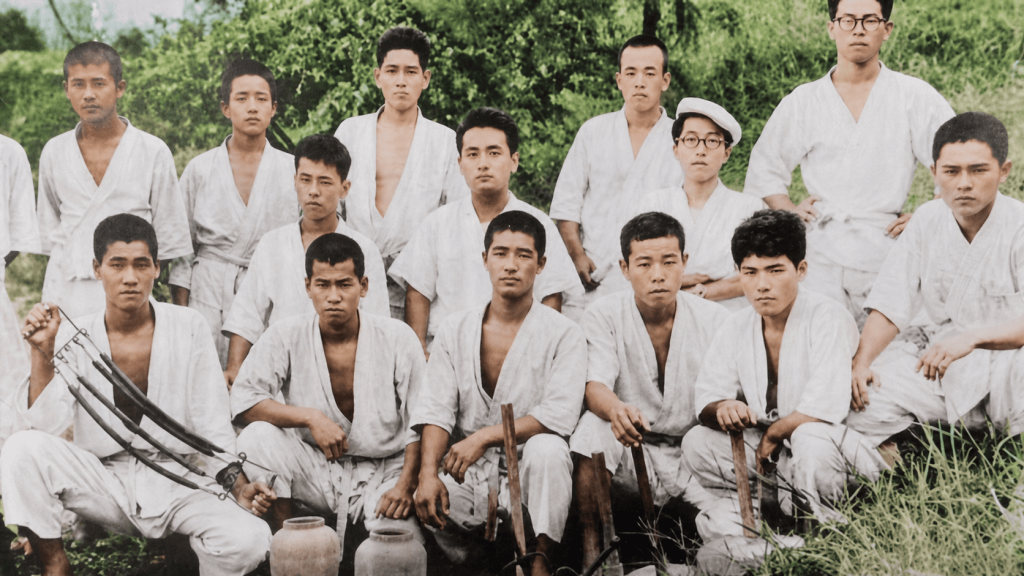
In 1959, An'ichi Miyagi unfortunately left the Jundokan. He took a job on an American oil tanker and went to sea.
For Morio, this was a wound that would not fully close for decades. His teacher was gone. The man whose instruction he trusted above all others was somewhere in the Pacific Ocean. But he decided to stay and train. He was disciplined enough to do that.
Tokyo, a Hungry Young Instructor, and the Verdict of Donn Draeger
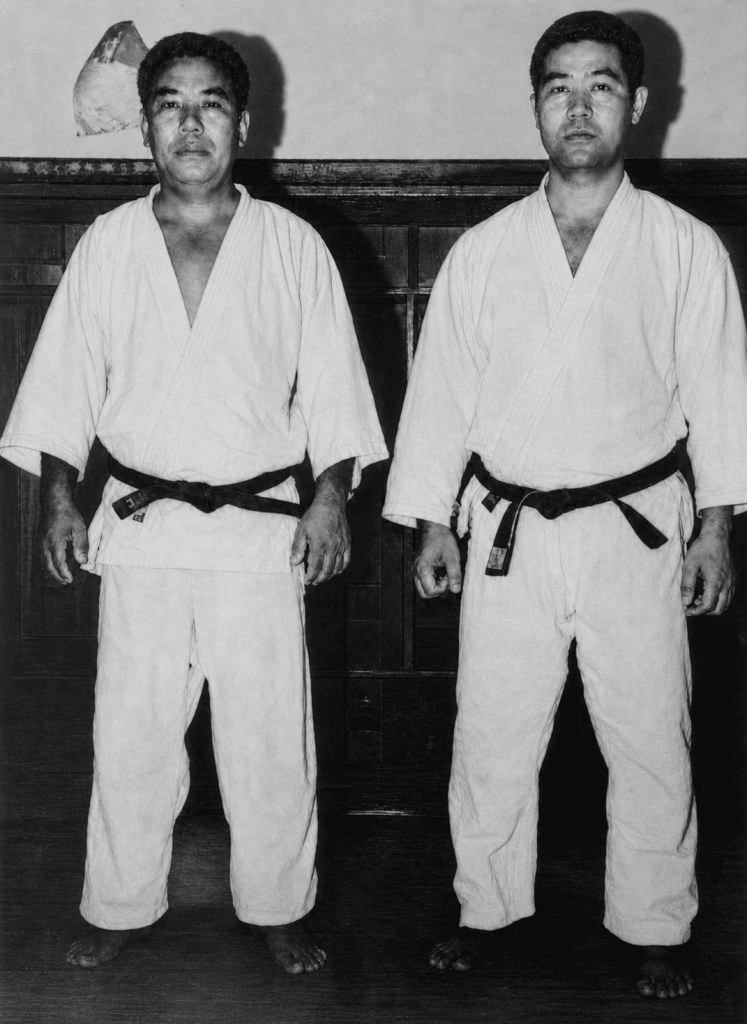
In 1960, Higaonna Morio packed his bags and moved to Tokyo to study at Takushoku University (拓殖 大学). He was twenty-one years old. He had a 3rd dan in Goju-ryu, a work ethic that bordered on obsession, and almost no money.
Tokyo was not welcoming to a poor Okinawan student in the early 1960s. He worked to survive, washing cars, doing construction labour, taking whatever physical work would pay enough to cover food and tuition. He slept at the dojo. The story is almost absurdly cinematic in its austerity: a young martial artist from a small island, sleeping on the floor of a training hall in the world's largest city, too committed to stop, too stubborn to be defeated by poverty.
He taught at the Yoyogi (代々木) dojo in central Tokyo. Initially a Shorin-ryu space, the curriculum shifted rapidly under his presence. His classes were unlike anything Tokyo's karate community had seen from Okinawa. While the major mainland styles, Shotokan (松涛館), Wado-ryu (和道流), Gogen Yamaguchi's (山口剛玄) Goju-Kai, had been adapted and polished for Japanese audiences and tournament competition, Higaonna taught something older, heavier, rawer. Sanchin done with such controlled ferocity that students sometimes wept from the physical stress. Kakie until the arms gave out. Makiwara work until the knuckles bled and then hardened. He conducted four classes a day. He demanded presence, not performance.
Word spread. And it spread in a particular direction especially toward foreign practitioners.
In the late 1960s and through the 1970s, Western martial artists were coming to Japan in substantial numbers. Many arrived at the Japan Karate Association expecting to find the real thing, and found instead a well-managed organisation with a tournament focus that didn't quite satisfy their hunger for something more ancient and more brutal. Word passed from person to person: there's a small Okinawan instructor in Yoyogi. You should go. You will not believe what you see.
Among those who went was Donn F. Draeger, an American scholar, researcher, and hoplologist who had spent decades studying Japanese combative systems with a depth and seriousness that most Western observers couldn't match. Draeger had seen a great deal. He was not easily impressed. He visited Higaonna's dojo, trained with him, watched him move, and arrived at a verdict that circulated throughout the martial arts world like a rumour that turned out to be completely true.
"The most dangerous man in Japan in a real fight."
It was not a commercial endorsement. It was not marketing copy. It was the assessment of a scholar who knew the difference between theatrical power and functional power, and who had just watched a short Okinawan man do things with his body that defied reasonable expectation. The quote travelled everywhere. It brought more students. It cemented an image that Higaonna himself seemed entirely indifferent to, he was not training to be famous or for being dangerous. He was training because his teacher had told him to train, because the kata demanded preservation, because Okinawa had given him something that he had a responsibility to pass on.
Among those who came and stayed at Yoyogi were some extraordinary names: Terry O'Neill from the Shotokan world, James Rousseau, Bakkies Laubscher, Ernest Brennecke. Many of them dropped their previous affiliations entirely. They had found something they couldn't find anywhere else, not just technical excellence, but a teacher who treated sincere foreign students with genuine respect, who corrected with specificity and patience, who believed that if you were willing to suffer properly in training, you deserved to be taught properly.
In April 1966, he received his 5th dan. In January 1967, he received menkyo kaiden (免許皆伝) the classical Japanese certification of complete transmission, meaning that the holder has been judged to have mastered everything the system contains and is authorised to pass it on in its entirety. He was twenty-eight years old. By any standard, he was already a master. By his own, he was still a student.
Paris, 1972, and the Question of What Karate Is For
In 1972, Higaonna was invited to demonstrate at the 3rd World Karate Championships in Paris.
The championships were dominated by tournament karate, the point-fighting, competition-format version of the art that had become globally popular but that traditionalists like Higaonna found fundamentally missed the essential point of the art. Trophies and medals were fine for those who wanted them. But they were not what karate was built on. They were not what his teacher had been trying to preserve. They were not what Sanchin was about.
He walked out and showed the audience what Goju-ryu actually was.
He performed Sanchin with the kind of dynamic tension that makes experienced practitioners wince with recognition. He moved through forms with the heavy, grounded power of a man whose entire body has been trained, not just the muscles that show up in photographs. The effect on other senior instructors was immediate and significant. Here was something different. Here was karate that hadn't been adapted for audience approval or athletic competition, karate that was still attached to its original function, still dangerous in the precise way that Draeger had identified, still speaking the language of Okinawa and Naha-te (那覇手) and the old lineage that stretched back through Miyagi Chojun and all the way to southern China.
Invitations followed. Tours through France in 1975 and 1977. Demonstrations in the United States. A visit to Spokane, Washington in 1968, where the mayor gave him an official award. A widening circle of students in Europe, North America, and beyond who were beginning to organise themselves around his teaching.
He was building something, though he would have resisted that framing. He was not an empire builder. He was a carrier of tradition. But the tradition was finding new ground wherever he went, and eventually the scale of what was growing around him required a formal structure.
Poole, England, 1979: The Birth of the IOGKF
By the late 1970s, Higaonna had students in dozens of countries. They were training in dojos named after Okinawan masters, following syllabi transmitted from a garden in Naha, performing kata that his teacher had performed, using makiwara and chi-ishi and nigiri-game the way their teacher's teacher's teacher had used them. But they were doing all of this without a unified framework, without a body that could protect standards and connect lineages and ensure that what was being taught in Cape Town bore some genuine relationship to what was being taught in Tokyo and Okinawa.
In July 1979, at a gathering in Poole, a coastal town in the south of England, Higaonna and representatives from eighteen countries met and agreed to create the International Okinawan Goju-ryu Karate-do Federation (国際沖縄剛柔流空手道連盟), the IOGKF.
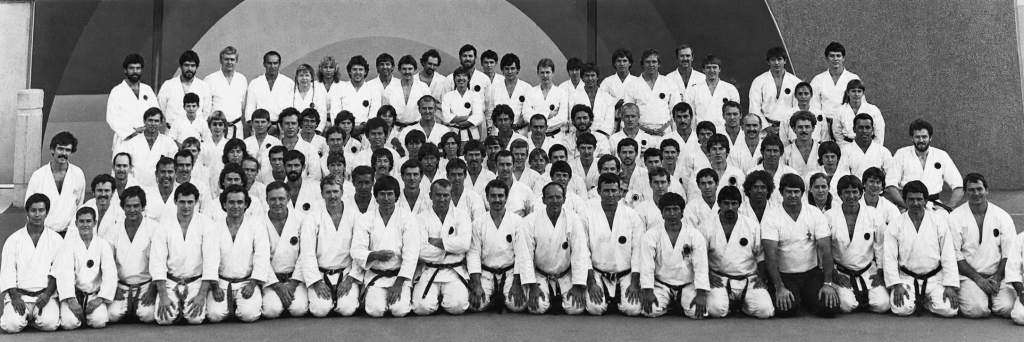
The founding mission was written with a precision that reflected everything An'ichi had drilled into him: the organisation existed "for the purpose of protecting and preserving the traditional Goju-ryu karate style of Okinawa as an intangible cultural treasure in its original form as passed on by Goju-ryu founder Miyagi Chojun."
Do not change the kata.
It was the same instruction, now encoded in organisational law.
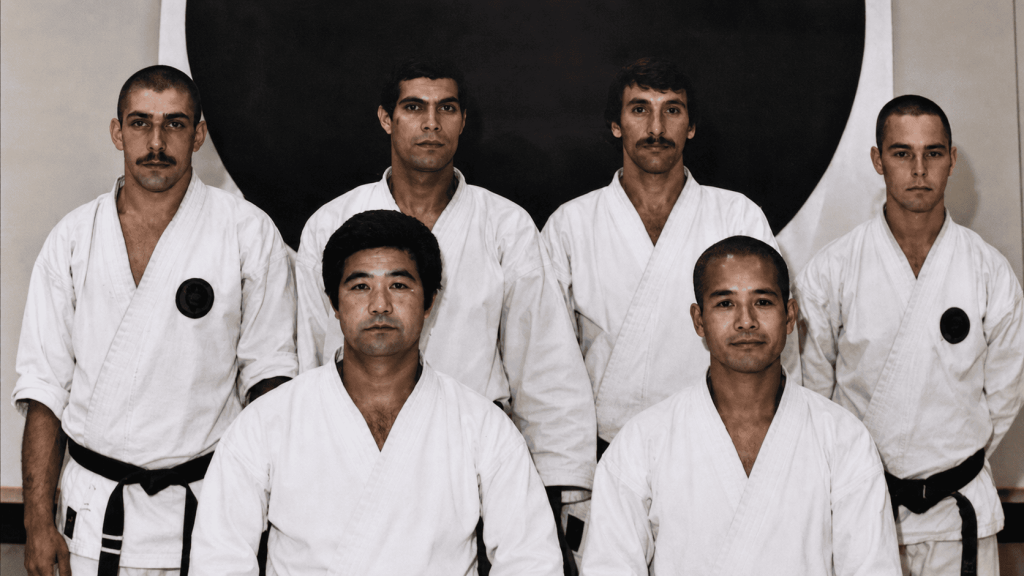
The founding had the blessing of the Miyagi family itself, including Miyagi Chojun's fourth son, Miyagi Ken, and An'ichi Miyagi, whose endorsement meant more to Higaonna than any formal title ever could. The IOGKF grew quickly. Within decades it had more than 55 affiliated countries and roughly 75,000 members, making it one of the largest traditional Goju-ryu organisations in the world. It was also recognised by the Nihon Kobudo Kyokai (日本古武道協会), the Japan Traditional Martial Arts Association, giving it formal standing within Japan's martial arts institutional landscape.
But growth brings complexity. And complexity brings conflict. We will get to that later.
China, History, and the Long Road Back to Fujian
Even as the IOGKF expanded, Higaonna was preoccupied with a deeper question: where did the kata actually come from?
Goju-ryu is a Naha-te style, and Naha-te has Chinese roots. The most important historical figure in that lineage is Higaonna Kanryo (東恩納 寛量), a 19th-century Okinawan master who travelled to Fuzhou (福州) in Fujian (福建) province, southern China, and spent years learning from a Chinese master known in Okinawa as Ryū Ryū Ko (劉龍公). Higaonna Morio was not related to Higaonna Kanryo by blood, a point he was careful to clarify but he was his inheritor by lineage, and the question of what exactly Ryū Ryū Ko had taught, and what Chinese system lay beneath the Goju-ryu kata, was one he could not ignore.
In the early 1980s he began traveling to Fujian. He made contact with White Crane masters in Fuzhou and Yongchun (永春), comparing their forms with the Okinawan kata he knew, looking for the genetic relationship between the two traditions. In 1988, almost exactly a century after Higaonna Kanryo had made his original journey to China, Higaonna Morio led a Goju-ryu delegation back to Fujian, seeking traces of Ryū Ryū Ko and the specific lineage that had produced Sanchin, Seisan (十三), Suparinpei (壱百零八), and the other forms at the heart of his art.
What he found confirmed his conviction that Goju-ryu was not simply a Japanese martial art. It was a cultural bridge between southern China and Okinawa, between the Fujian coast and the Ryukyu Kingdom (琉球王国), between systems of bodily knowledge that had been exchanged across the sea centuries before anyone thought to write them down. Preserving the kata was not just about karate. It was about preserving a record of that exchange, that living archive of human movement and intent that no document could fully capture.
He wrote about all of this. His multi-volume series "Traditional Karate-do: Okinawa Goju Ryu," published in the mid-1980s, gave practitioners worldwide detailed, photographed documentation of every major kata and hojo undo (補助運動) exercise. His book "The History of Karate: Okinawan Goju Ryu" attempted to synthesise oral histories and lineage knowledge into a coherent narrative. For many students in countries far from Okinawa, these books were their primary reference. They kept the standards alive between visits, between seminars, between the rare and precious occasions when Higaonna himself walked into a room and corrected someone's Sanchin in person.
Naha Again, a Dojo Under His Mother's House
In 1981, he moved his family back to Okinawa. His wife Alanna, an American student he had married in 1980, had become deeply involved in the editorial and administrative work that his writing and organisational responsibilities demanded. Their son, Seigi Eric Higaonna (比嘉恩納 誠義), was born in November 1981 and would grow up to be an accomplished martial artist in his own right, not just a Goju-ryu practitioner but a wrestler, eventually an undefeated MMA fighter, a man who bridged his father's traditional system with modern ground combat in ways that proved, concretely, that what had been preserved was not just cultural artifact but functional fighting knowledge.
In 1982, Higaonna opened his Honbu (本部) dojo, the headquarters in the Tsuboya (壺屋) pottery district of Naha. He built it, with characteristic groundedness, beneath his mother's house.
The dojo became a pilgrimage destination. Senior IOGKF instructors from around the world would arrive in Naha, sometimes traveling for days, just to train there and be corrected by the source. The routine remained exactly what it had always been: hojo undo, kakie, Sanchin, correction, more Sanchin. Students who had been training for twenty years would find themselves undone by a single observation from Higaonna, not because he was cruel, but because he was accurate.
He was also visited by television crews. In 1983, the BBC documentary series "The Way of the Warrior" featured him in an episode that broadcast his training methods to a global audience and permanently shaped how the Western world imagined a traditional karate master. The footage is still extraordinary to watch: a compact, precise man performing Sanchin with such controlled intensity that the camera seems inadequate to capture it.
His reach extended in directions that surprised even those who knew him well. In 1995, he was appointed as the karate and unarmed combat instructor for the Kremlin Guard, as well as police and security forces of the Russian Federation. In 1994, he was a founding member of the Hokubei Karate-do Shihankai (北米空手道師範会) the Japanese Karate Masters of North America, alongside martial arts luminaries such as Fumio Demura (出村 文男), Hirokazu Kanazawa (金澤 弘和), and Takayuki Mikami (三上 孝之). In 1998, the Nihon Kobudo Kyokai formally recognised Okinawan Goju-ryu as legitimate Kobudo and appointed Higaonna as its representative master.
A Living National Treasure
On May 8, 2013, the Okinawa Prefectural Government officially designated Higaonna Morio as a holder of the Prefectural Intangible Cultural Asset in the field of Okinawan karate and martial arts with weaponry, a recognition colloquially translated as "Living National Treasure," representing the highest honour the prefecture can bestow on an individual martial artist.
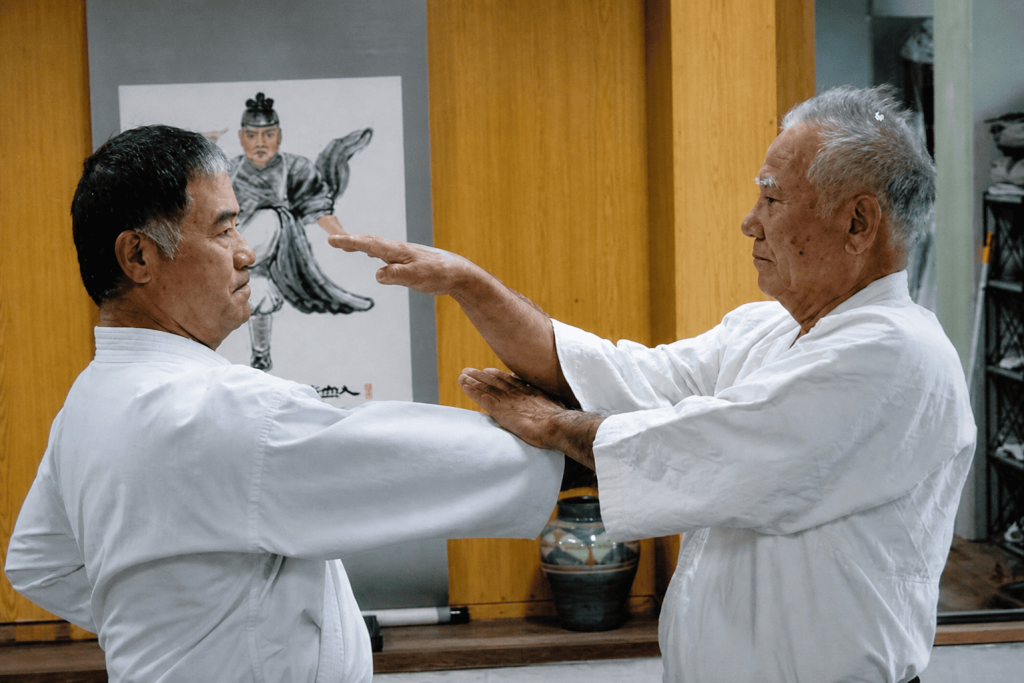
The citation acknowledged not just his technical rank, a 10th dan hanshi (範士), conferred in September 2007 in a ceremony at his Naha dojo by An'ichi Miyagi himself, in the presence of senior instructor Shuichi Aragaki (新垣 修一) but decades of work preserving, teaching, and carrying Goju-ryu to every part of the inhabited world. His lineage was formally recognised: Ryū Ryū Ko → Higaonna Kanryo → Miyagi Chojun → Miyagi An'ichi → Higaonna Morio. A living link in a chain that stretched back to 19th-century Fujian.
In February 2019, he was invited by Prime Minister Shinzo Abe (安倍 晋三) to attend the Japanese Emperor's 30th Anniversary event at the National Theatre of Japan, a singular distinction for an Okinawan martial artist, a recognition that his work had transcended the boundaries of the dojo entirely and entered the cultural patrimony of the nation.
When An'ichi Miyagi presented him with the 10th dan, both men were old. An'ichi passed away in 2009, two years later. The ceremony was therefore charged with something beyond mere rank promotion. It was a handover, not of authority, but of responsibility. You carry this now, the gesture said. You are the one who remembers what I showed you. Do not change it.
He did not change it.
The Break With the IOGKF and the Founding of TOGKF
No life of genuine conviction passes without conflict, and Higaonna's teaching has not been without turbulence.
By 2012, the official IOGKF narrative positions him as having stepped back from day-to-day leadership, transitioning into an advisory role. But Higaonna's own understanding of what happened was different. From his perspective, he had not retired. He had not handed over authority. He had been, gradually and then suddenly, sidelined from an organisation he had founded and led for over four decades, an organisation whose existence was inseparable from his name, his teaching, and his lineage.
The disputes were complex: questions of constitutional interpretation, intellectual property rights, the authority of the world chief instructor versus elected leadership bodies, and the kind of organisational politics that accumulate in any institution over many decades. In September 2022, Higaonna resigned from the IOGKF. On 29th October, 2022, the Traditional Okinawan Goju-ryu Karate-do Federation (伝統沖縄剛柔流空手道連盟) the TOGKF, held its first formal meeting, with Higaonna at its head.
The parallels with what An'ichi Miyagi had endured at the Jundokan in 1959 were not lost on those who knew the history. The pattern of a principled teacher leaving an institution because an institution had compromised principles, it had happened before, in a smaller garden in Naha, sixty years earlier. History does not simply repeat, but it rhymes with enough persistence that those paying attention can hear the cadence.
What matters is what continued. In 2025, at the TOGKF World Budosai, Higaonna personally presided over senior-rank promotions. At over eighty years old, he was still the centre of his world's gravity. Students still flew from five continents to be corrected by him. The kata were still being performed and scrutinised and refined, the same kata that An'ichi had performed for him in a hot outdoor yard in Naha seventy years before, the same kata that Miyagi Chojun had received from Chinese sources in the 19th century, the same forms that could, if you performed them correctly, if you breathed correctly, if you let your body become the thing itself rather than a representation of it, connect you to something very old and very real.
What He Actually Believes
Over decades of interviews, seminars, and written reflections, a picture of Higaonna's philosophy emerges that is almost disarmingly simple.
He believes in repetition. He believes that kata must be repeated until the movement escapes conscious thought and becomes purely instinctive, what the Japanese tradition calls the state of mushin (無心) "no mind." He does not believe this happens quickly. He does not believe it happens through insight or inspiration. It happens through ten thousand repetitions, and then ten thousand more, in the heat of an Okinawan dojo with sweat running down your face and your teacher watching every angle of your posture.
He believes in teachers. He offers incense and tea to photographs of his instructors. He speaks of Miyagi An'ichi with a reverence that is not performance but devotion, the kind of devotion that only forms when someone has given you something precious and you understand what a gift it was. When asked who taught him, he always gives the same answer. Not Miyazato. Not some broad lineage. An'ichi. Specifically An'ichi. The person who stood in front of him, day after day, and demanded one more time.
He believes that good karate makes good people. This might sound like a platitude until you hear him say it and realise he means it in a specific, non-trivial way. The training he has in mind is hard enough that it produces humility as a side effect. You cannot train seriously in Goju-ryu for long and retain a significant ego, not because anyone lectures you about humility, but because the work itself continuously reveals how much you don't know, how far you are from what you're trying to become.
He believes in those who doubt themselves. He has said explicitly that he enjoys teaching students who think they cannot succeed, because he can see that they can, and because he remembers being that student, the nervous sixteen-year-old at the garden gate in Naha, uncertain whether he deserved to be there. Someone saw potential in him. He extends the same vision to others.
And he believes, above all else, that what he was given is not his to change. The kata belonged to no one person. They were a form of cultural memory, a sequence of movements that preserved the knowledge of masters long dead, that carried inside them applications and principles that required lifetimes to fully understand. His job was not to improve them. His job was to learn them well enough to pass them on unchanged.
"Never change the kata," An'ichi had said, "because kata is Okinawan culture."
Higaonna Morio spent his entire life saying exactly the same thing.
The Man Behind the Legend
There is one final thing to say about him, and it is the thing that the documentary footage and the official biographies tend to miss.
He is funny.
Not in a broad, performative way. In the dry, specific way of a man who has seen too much of the world to be impressed by the usual theatre of seriousness. Students who have trained under him describe someone who can be terrifyingly exacting in the dojo and then, five minutes later, be sitting at a table laughing at something with an ease that makes the severity seem, in retrospect, almost loving. Because it was. The demands he made of students were the same demands that had been made of him, by a teacher who believed enough in him to refuse to let him be less than he could be.
He grew up swimming alone in the sea near a shrine, playing hooky from school in a bombed-out island rebuilding itself from ash. He nearly died before he was ten. He watched his teacher walk away from an institution over a matter of principle. He slept on the floor of a Tokyo dojo so he could eat enough to train. He travelled to China to look for the ghost of a 19th-century master in the forms of White Crane practitioners in Fujian. He had a bronze statue of John Lennon in his dojo for reasons no official biography has fully explained. He taught the Kremlin Guard. He was called the most dangerous man in Japan by a man who knew what dangerous looked like.
He did all of this in service of a set of kata that he refused, always and under every pressure, to change.
That is his biography. It is the story of a man who was given something and understood that his only real task was to pass it on whole. In a century that prizes innovation and disruption and the constant shedding of the old in favour of the new, that is its own kind of radicalism.
Do not change the kata.
It sounds like a conservative instruction. It is, in fact, a revolutionary act, the fierce, stubborn insistence that some things are worth preserving exactly as they are, that some forms of human knowledge can only be transmitted through the body over years of suffering and devotion, and that the chain from master to student, maintained with enough care across enough generations, can keep something alive that would otherwise vanish from the earth entirely.
Higaonna Morio is 87 years old. He is still in Naha. He is still, by most accounts, still teaching, still correcting, still watching his students' Sanchin with the careful eyes of a man who has spent seventy years looking at exactly this movement and knowing exactly what is wrong and exactly how to fix it.
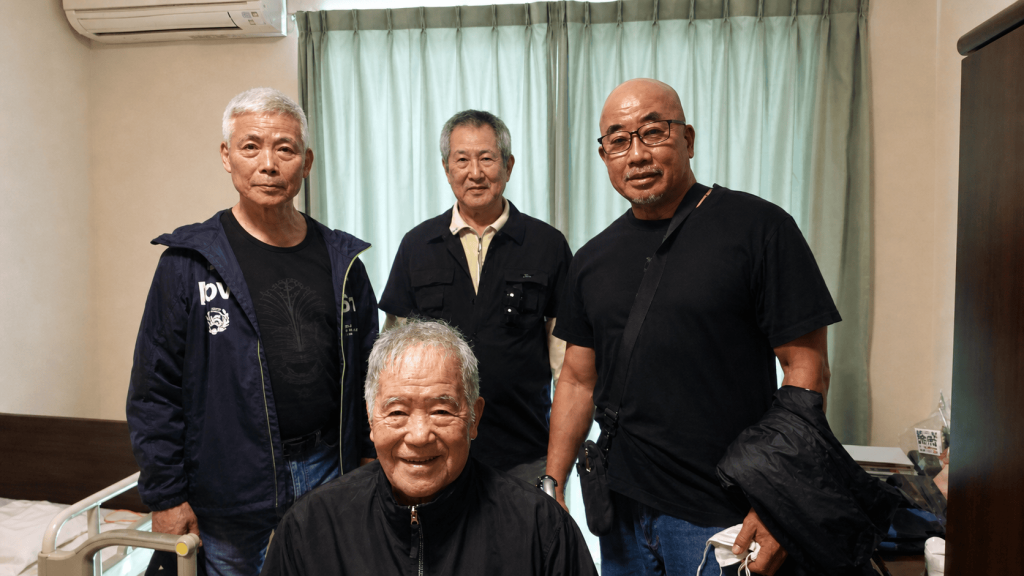
And then, just days ago, came one final honour, perhaps the most remarkable of all. On 29 April 2026, representatives of Emperor Naruhito (徳仁) of Japan paid a personal visit to Higaonna Sensei to bestow upon him the Kyokujitsu Soukoushou (旭日双光章), the Order of the Rising Sun and Light, one of the most prestigious and rare imperial decorations in Japan, and a recognition that carries weight not merely on a national scale but on a global one. The story was reported by two of Okinawa's most prominent newspapers, the Ryukyu Shimbun (琉球新報) and the Okinawa Times. For those who have spent years or decades on the floor of a Goju-ryu dojo, the news carried a particular resonance, not as a surprise, but as a confirmation of what the practice itself has always quietly known: that what Higaonna Morio has spent his life protecting and transmitting is not merely a martial art. It is a civilisation's memory, carried in the body of one man, passed on through the hands of his students to every corner of the earth.
The kata continues.