
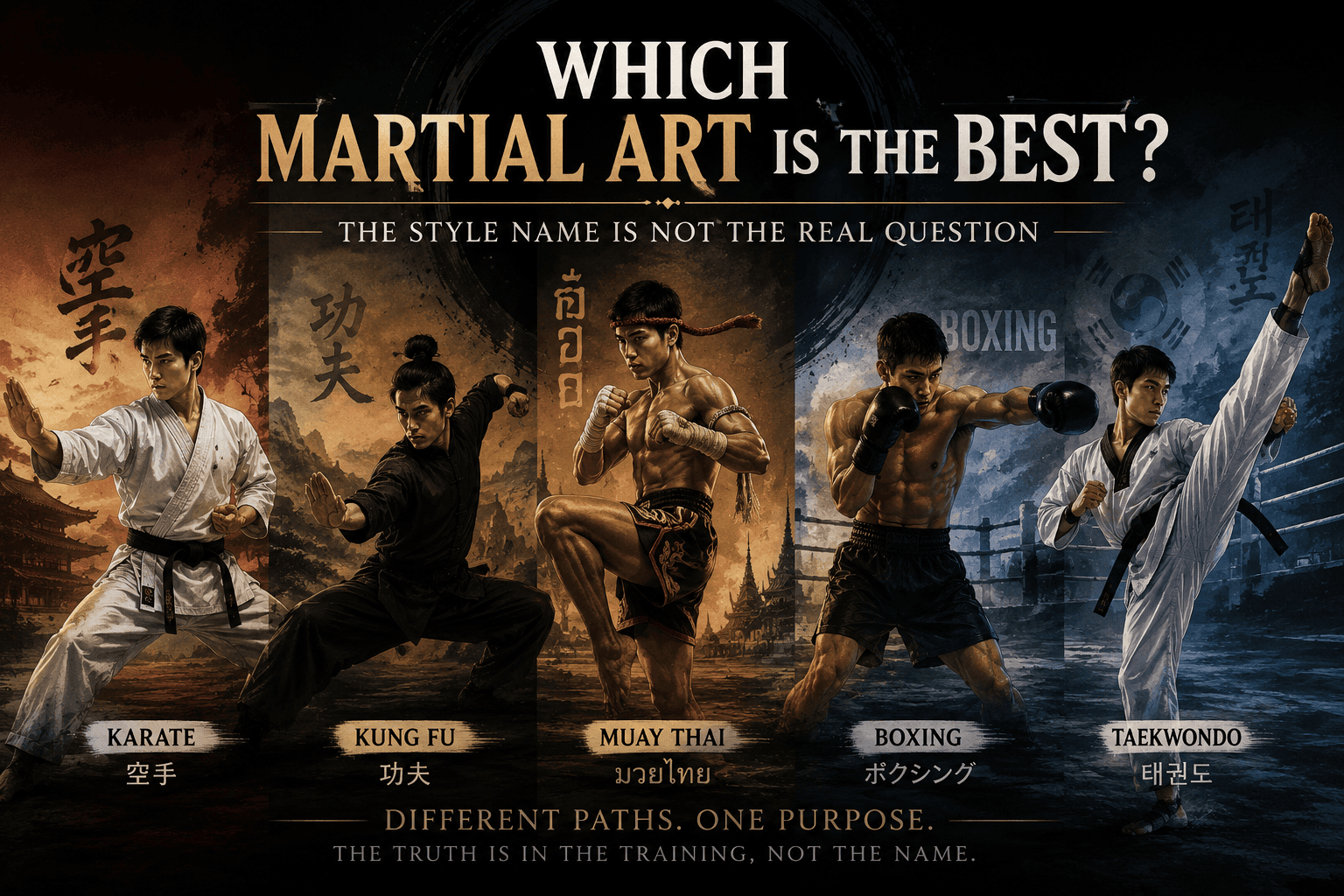
People often ask which martial art is the best.
Karate or Muay Thai? Kung Fu or boxing? Traditional martial arts or MMA?
These debates can go on forever. Everyone has an example. Someone knows a traditional martial artist who could not handle sparring. Someone else knows a boxer who struggled when the situation moved outside the rules of boxing. Then the conversation quickly becomes an argument about which style is “real” and which style is not.
After many years of training in both Chinese martial arts and Japanese karate, I think we are often asking the wrong question.
The name of the art matters, but it does not tell you everything. Two schools may teach the same style and yet feel completely different. One may spend most of its time on forms, basics and technical detail. Another may include pads, partner drills and regular sparring. A third may focus mainly on fitness.
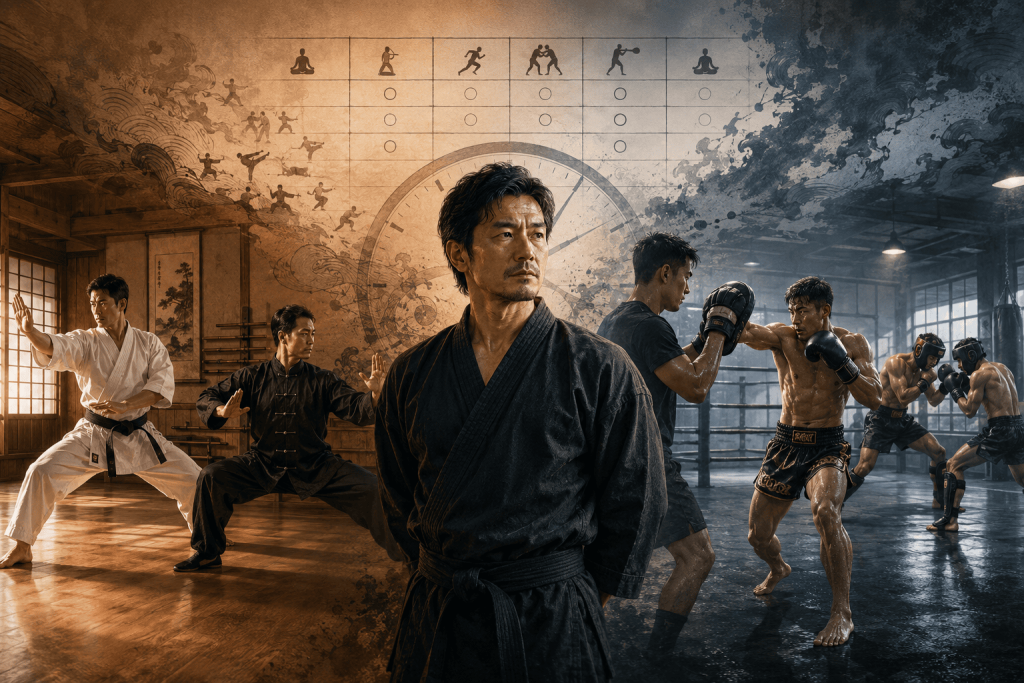
The more useful question is much simpler:
What do you actually practise every week?
Because, in the end, you become good at what you repeatedly train.
Most martial arts sit somewhere on a spectrum
It is tempting to divide martial arts into two camps: traditional and modern.
Traditional martial arts are often associated with kata, forms, line work, etiquette and a structured syllabus. Combat sports are associated with pads, sparring, physical conditioning and pressure-testing.
There is some truth in that distinction, but reality is rarely so neat.
Most schools sit somewhere on a spectrum.
At one end, there are traditional schools that place a strong emphasis on preserving the form of the art. Training may include basics, kata, breathing exercises, technical drills and controlled partner work.
At the other end, there are combat-based systems such as boxing, Muay Thai, kickboxing, Brazilian Jiu-Jitsu and MMA. Their training tends to be direct: warm up, drill, hit pads or bags, work with a partner, then test your skills against resistance.
Between these two ends is a large middle ground. Many karate schools, for example, still teach kata and traditional basics but also include pad work, applications and sparring. Some lean more heavily towards tradition. Others lean more heavily towards fighting.
This is why the name above the door only tells you so much.
Look at the ingredients, not just the label
Most martial arts classes are built from a fairly small set of ingredients:
- warm-ups and stretching
- strength and conditioning
- basics such as punches, kicks, blocks and footwork
- pad work or bag work
- partner drills
- kata or forms
- applications
- sparring
- breathing exercises, Qigong or meditation
No school gives equal time to everything. It would be impossible.
Every instructor has to choose what deserves the most attention. Every student also has to decide what they are looking for.
A boxing gym will naturally spend a great deal of time on pads, movement, combinations and sparring. A traditional karate dojo may spend more time refining basics, kata and applications. A Kung Fu school may include forms, stance work, partner drills and conditioning.
None of these choices is automatically right or wrong. They simply produce different results.
The problem begins when the training method does not match the student’s expectations.
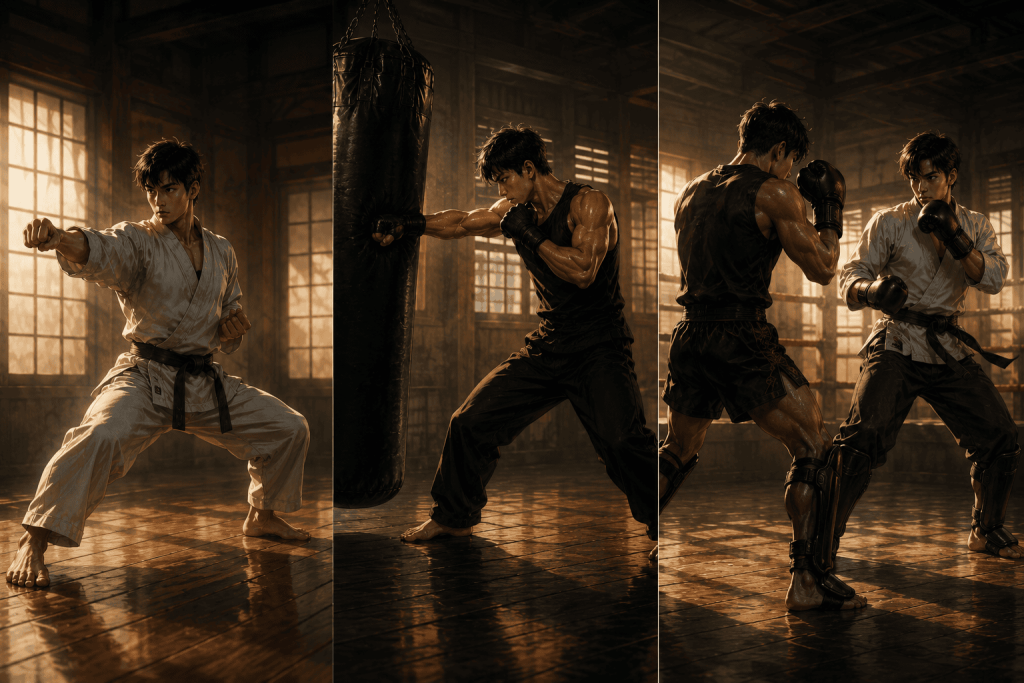
Someone may join a traditional martial arts school expecting to become confident in live fighting situations, only to discover that there is very little sparring or resistance-based work. Another person may join a combat-sports gym looking for a deeper traditional practice and find that the class is almost entirely focused on athletic performance.
Both students may feel disappointed, even though neither school has necessarily done anything wrong.
Sparring is important, but it is still a game
Combat sports place sparring near the centre of training, and for good reason.
Sparring gives immediate feedback. Your timing either works or it does not. Your guard either protects you or it does not. Your fitness, composure and reactions are tested in a way that solo practice cannot reproduce.
There is no hiding place when another person is trying to hit you, throw you or submit you.
But sparring is not the same as a real fight. It always operates inside a framework. There are rules, gloves, rounds, weight classes, agreed levels of intensity and techniques that are not allowed.
That does not make sparring unrealistic or useless. It simply means that sparring is a particular kind of test. It is also a game, in the best sense of the word. You learn how to perform well within that game.
A boxer becomes very good at boxing because boxing training is focused. A Muay Thai fighter becomes good at fighting within the range, rhythm and rules of Muay Thai. A Brazilian Jiu-Jitsu practitioner becomes skilled at controlling and submitting a resisting opponent on the ground.
The strength of combat sports is clarity. The feedback is honest, and the training goal is clear.
Kata is a format, but a different one
Traditional martial arts often place kata or forms at the centre of training.
The test is different.
Instead of asking whether you can win a round, kata asks whether you can control your posture, movement, breathing, timing, balance and technique. It gives you a structure to return to again and again over many years.
At its best, kata is not an empty performance. It is a library of movement.
A single form can contain principles of body mechanics, transitions, close-range techniques, changes of direction, control of tension and relaxation, and ways of generating power. As your understanding changes, the same kata can reveal different things.
This is one of the reasons traditional martial arts can remain interesting over a lifetime. You do not simply collect more techniques. You keep revisiting the same movements and gradually see more inside them. Just ask Higaonna Morio Sensei said: 温故知新 (Review the old to learn the new).
If forms become separated from partner work, pad work and pressure-testing, they can become too comfortable. A movement may look clean and powerful in the air but fall apart when distance, timing and resistance are introduced.
Form gives you a map. It does not automatically prove that you can travel through difficult terrain.
The bridge between tradition and function
This is where applications and partner drills become important.
Traditional martial arts need some way of connecting solo practice with another human being. In karate, this is often discussed through bunkai: taking movements from kata and exploring how they may work with a partner.
Done properly, this can be valuable.
Pad work teaches you whether you can generate power. Partner drills teach you distance, positioning and reaction. Sparring teaches you whether you can stay calm when the other person is not cooperating.
Each method reveals something different.
The mistake is expecting one training method to do everything.
Kata alone is not enough. Sparring alone is not enough. Hitting pads is not the same as fighting. Fighting rounds do not automatically teach every aspect of self-defence. Traditional drills can build useful habits, but they can also create false confidence if the partner is always compliant.
Every method has strengths. Every method also has limits.
A good school understands what each exercise is designed to develop.
There is never enough time to train everything
This is the part people often overlook.
Most of us are not full-time martial artists. We train two or three times a week. Perhaps we have work, family responsibilities and other commitments. A ninety-minute class passes quickly.
You cannot spend half an hour on fitness, half an hour on basics, half an hour on kata, half an hour on bunkai, half an hour on pads, half an hour on sparring, and then finish with breathing exercises.
Something has to be prioritised.
Traditional kung fu provides a good example. A typical class may include preparation exercises, stretching, basics, form and applications. This keeps the traditional backbone of the art while making an effort to connect the forms to practical use.
But time spent on form is time that cannot be spent on pads or sparring.
Compare that with a Muay Thai class. There may still be a warm-up and conditioning, but the main part of the lesson is likely to focus on drills, pad rounds, clinch work and sparring.
That creates a very different kind of practitioner.
The difference is not mysterious. It is simply the result of how the hours are spent.
Even schools within the same style can be very different
This is why I am cautious when people make sweeping statements about a particular martial art.
One karate dojo may be heavily focused on kata and technical precision. Another may include regular pad work and hard sparring. Another may mainly prepare students for point-based competition.
Even the type of sparring matters.
Point sparring can develop excellent speed, timing and control of distance, but it can also encourage a habit of stopping after a clean technique has landed. Full-contact sparring develops toughness and the ability to continue through exchanges, but it brings its own limitations and injury risks.
Neither approach gives you everything.
The instructor, the syllabus and the way the class is taught often matter more than the style name alone.
Be honest about why you are training
Before choosing a martial art, it helps to ask yourself what you really want.
Are you looking for fitness? Self-defence? Competition? Tradition? Discipline? Cultural depth? Stress relief? A long-term practice that can continue as you get older?
There is no wrong answer.
The mistake is pretending that everyone must want the same thing.
A young person who wants to compete may need a very different training environment from someone in their forties or fifties who wants to build health, resilience and technical understanding over the long term.
Someone who wants regular hard sparring should look for a school that offers it. Someone who values kata, traditional practice and a deeper technical syllabus should feel comfortable with that too.
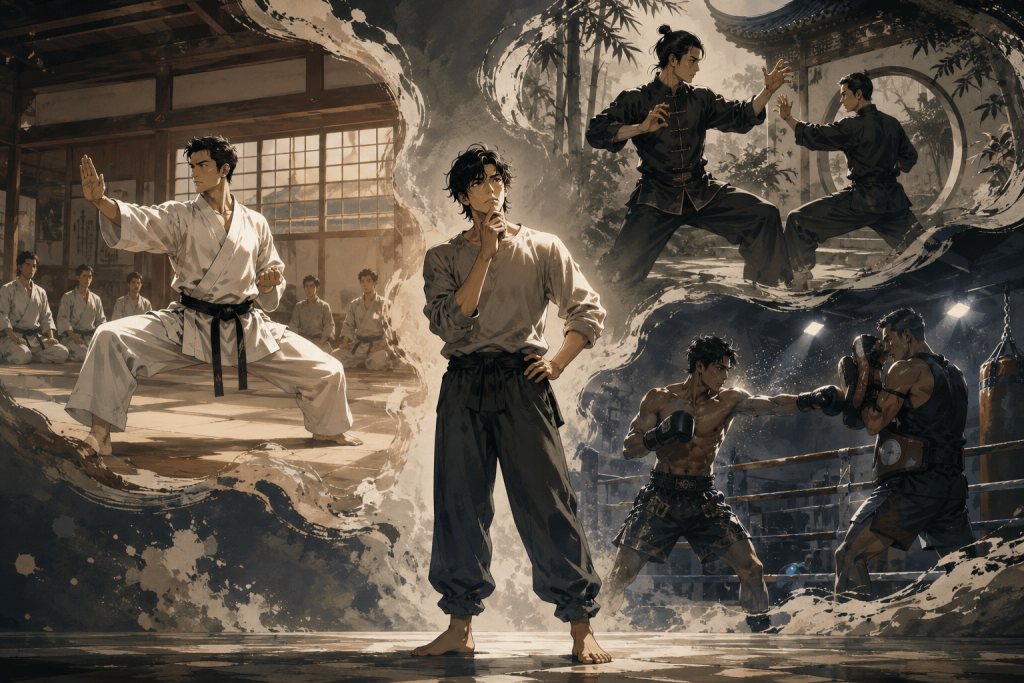
The important thing is to look clearly at what the class actually provides.
Do not ask only, “Which style is best?”
Ask:
- How much pad work is there?
- How often do students spar?
- What kind of sparring do they do?
- Is the partner work realistic or completely scripted?
- Is the emphasis on fitness, competition, self-defence or personal development?
- Does that match what I am looking for at this stage of my life?
Cross-training can fill the gaps
Sometimes one school cannot give you everything you want. That is normal.
Cross-training can be useful when it is done with a clear purpose.
A traditional kung fu practitioner may benefit from occasional boxing pad work to sharpen timing, movement and hand combinations. A combat-sports athlete may find value in traditional training that slows things down and develops posture, coordination, mobility and technical detail.
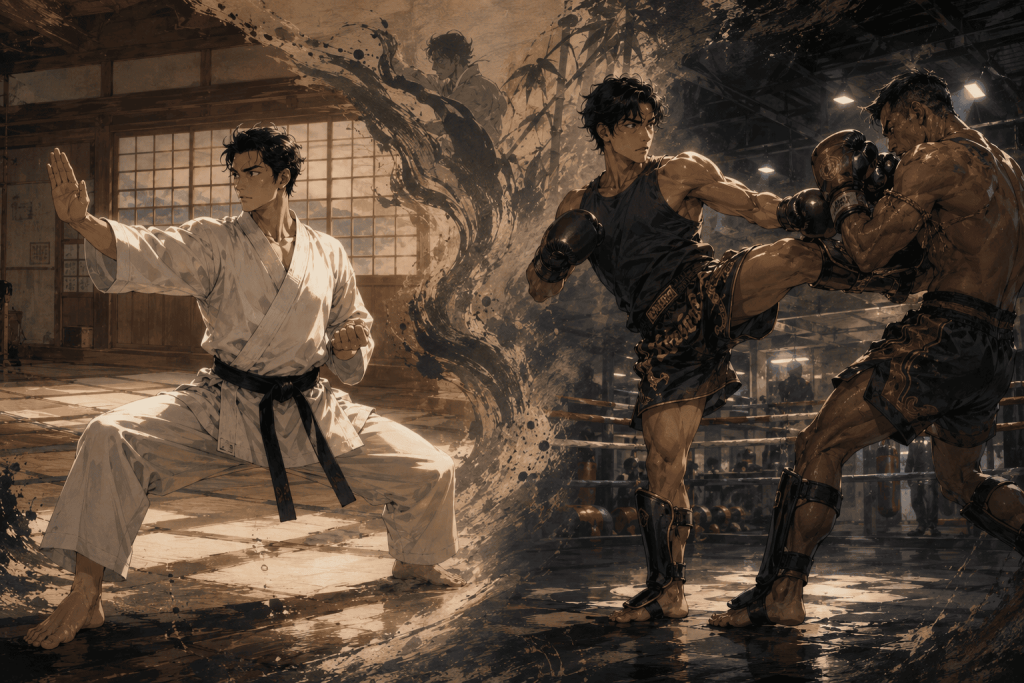
Cross-training does not mean collecting styles for the sake of it.
It means understanding where your gaps are and training intelligently.
The important thing is to keep a clear centre. Without that, it is easy to become someone who has sampled many things but developed depth in none of them.
A master of everything is a master of none.
The deeper reason for training
For most of us, real fights are rare.
That does not mean martial arts should become unrealistic. We should still train seriously. We should still test ourselves. We should still be honest about what works and what does not.
But preparing for a hypothetical street fight cannot be the only reason to practise for thirty years.
The deeper value of martial arts is what the training does to you over time.
You become more disciplined. You learn how to continue when progress feels slow. You become more comfortable with discomfort. You learn to stay calm under pressure. You develop a stronger body and, ideally, a steadier mind.
Belts and titles matter less than people think.
Very few students will reach the highest grades. Fewer still will become famous instructors. But that is not the point.
The real question is whether training improves your life.
- Does it make you healthier?
- Does it help you deal with stress?
- Does it give you confidence without making you arrogant?
- Does it teach you something useful that you can eventually pass on to someone else?
The truth is in the timetable
Traditional martial arts, hybrid systems and combat sports all have something valuable to offer.
None of them is automatically real. None of them is automatically fake.
The truth is not in the marketing. It is not in the belt colour. It is not even in the name of the style.
The truth is in the timetable.
What do you practise every week?
If you spend most of your time sparring, you will become better at performing under pressure.
If you spend most of your time on forms, you will develop a deeper technical vocabulary and a more detailed understanding of movement.
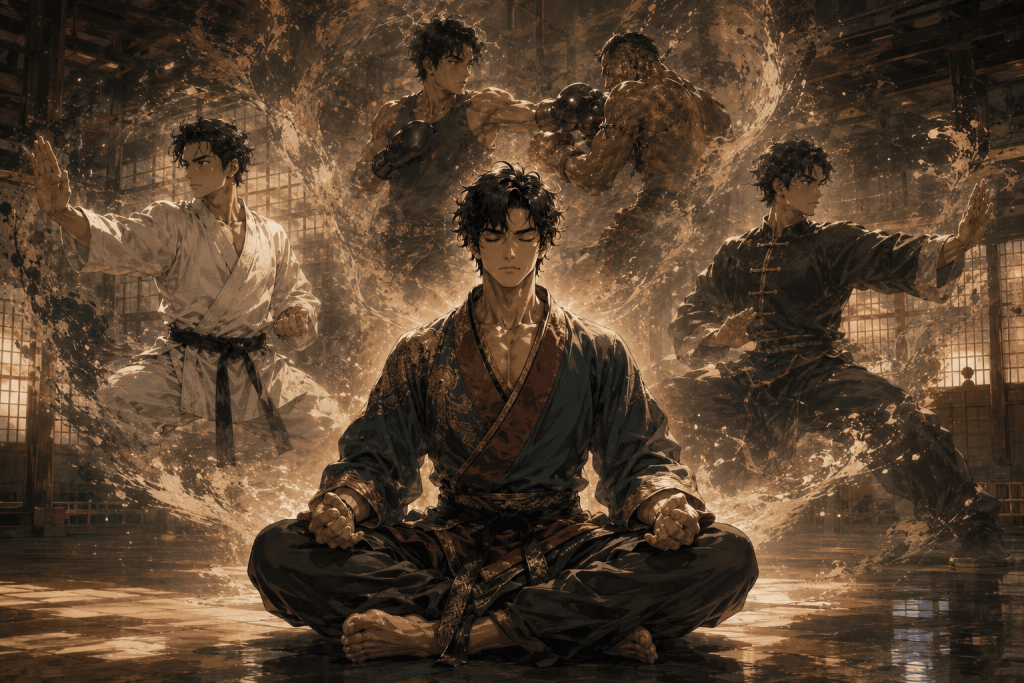
If your school tries to balance tradition with practical training, your progress will depend on how well that balance is managed.
So, whether you are starting martial arts for the first time or returning after a long break, look beyond the sign above the door.
Watch a class. Speak to the instructor. Be honest about what you want.
Then choose the place where the training matches the person you are trying to become.